
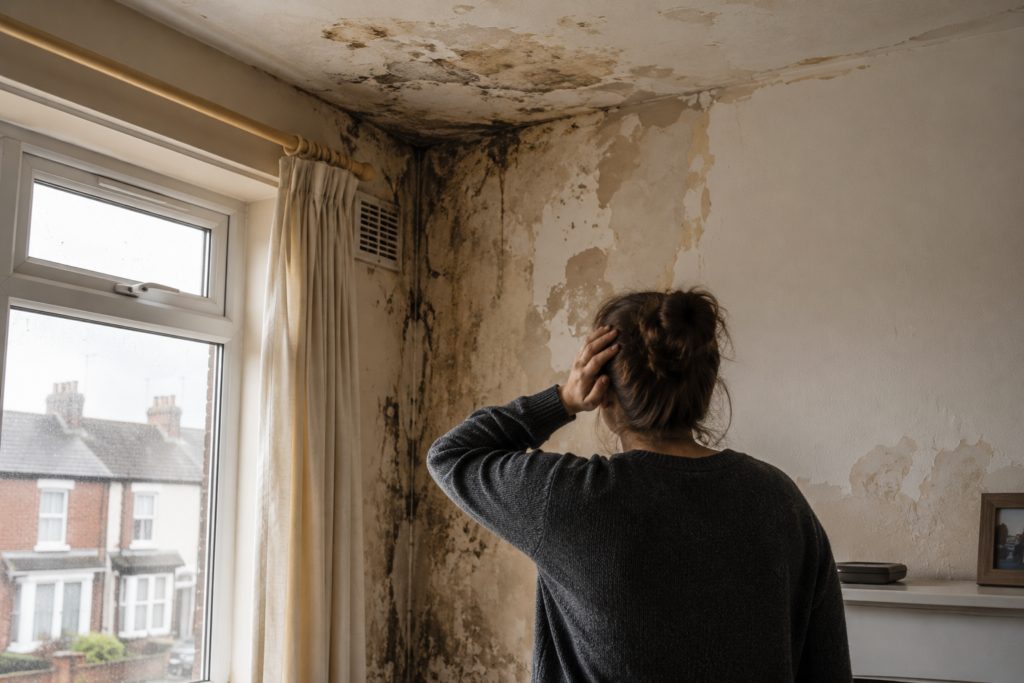
Damp patches, black spots creeping across the ceiling, that musty smell that never quite goes away — damp and mould are among the most common problems tenants face, and among the most damaging to your health and your belongings. The good news is that you don’t have to put up with it. If your landlord has failed to deal with damp and mould in your rented home, you may be able to force the repairs and claim compensation.
This guide explains your rights as a tenant in England and Wales, the health risks involved, and exactly how to make a housing disrepair claim for damp and mould.
Is your landlord responsible for damp and mould?
In most cases, yes. Your landlord — whether that’s a council, a housing association or a private landlord — has a legal duty to keep your home in repair and fit to live in. Two key pieces of law sit behind that duty:
- The Landlord and Tenant Act 1985 requires landlords to keep the structure and exterior of your home in repair, along with installations for water, heating and sanitation. Leaks, broken guttering and failing damp-proofing fall squarely within this.
- The Homes (Fitness for Human Habitation) Act 2018 goes further, requiring rented homes to be fit for human habitation throughout the tenancy. Serious damp and mould can make a home unfit — and gives you the right to take action. You can read the official government guide for tenants for more detail.
Following the tragic death of two-year-old Awaab Ishak from prolonged exposure to mould, the rules have been tightened still further. Awaab’s Law now requires social landlords to investigate and fix dangerous hazards such as damp and mould within strict timescales. In short: ignoring damp and mould is no longer something a landlord can get away with.
Condensation, damp and mould — whose fault is it?
Landlords will sometimes blame tenants for mould, claiming it’s down to “lifestyle” — drying washing indoors, not opening windows, and so on. Don’t be put off by this. There are three broad types of damp, and most are the landlord’s responsibility to put right:
- Penetrating damp — water getting in through the roof, walls or windows because of disrepair.
- Rising damp — moisture rising from the ground due to a failed or missing damp-proof course.
- Condensation — the most common cause of mould. Even here, the landlord is often at fault: inadequate ventilation, poor insulation, or a home that simply can’t be kept warm and dry is a defect, not a lifestyle choice.
If reasonable everyday living leads to mould because the property is poorly ventilated or insulated, the responsibility usually lies with the landlord.
The health risks of living with mould
Damp and mould are not just unpleasant — they can be genuinely dangerous. The NHS warns that mould can cause or worsen respiratory problems, allergies and asthma, with babies, children, older people and anyone with a weakened immune system most at risk. You can read more on the NHS guidance on damp and mould and your health.
If damp and mould in your home have affected your health, or your child’s, that strengthens your case considerably — and the impact on your health forms part of any compensation you may be owed.
What to do if your landlord ignores damp and mould
Before you claim, it helps to build a clear record. Take these steps:
- Report it in writing. Email or text your landlord so there’s a dated record. A phone call alone is hard to prove.
- Keep evidence. Photograph the damp and mould, note the dates problems appeared, and keep any replies (or silence) from your landlord.
- Log the impact. Record damaged belongings, ruined décor, higher heating bills, and any GP visits or health problems linked to the conditions.
- Contact environmental health. Your local council can inspect the property and order the landlord to act.
- Don’t withhold rent. It’s tempting, but it can put you at risk of eviction. Get legal advice instead.
Can you claim compensation for damp and mould?
Yes. Where a landlord has been told about damp and mould and failed to fix it within a reasonable time, you can bring a housing disrepair claim. A successful claim does two things: it secures a court order compelling your landlord to carry out the repairs, and it recovers compensation for what you’ve put up with.
At Din Solicitors we handle these claims on a No Win No Fee basis — so there’s nothing to pay upfront, and nothing to pay if your claim isn’t successful. It’s part of our wider tenant housing work, which also covers issues like tenancy deposit disputes.
How much compensation could you get?
Every case is decided on its own facts, so we can’t promise a figure — but compensation for damp and mould generally reflects three things:
- Inconvenience and loss of use. Courts often award a percentage of your rent for the period you were affected — frequently in the region of 25% to 50% of rent for serious disrepair, and sometimes more where rooms became unusable.
- Damage to your belongings — furniture, clothing, carpets and electrical items ruined by damp.
- The effect on your health, where damp and mould caused or worsened a medical condition.
In practice, awards range from a few hundred pounds to several thousand, depending on how bad the disrepair was and how long it lasted. The only way to get an accurate figure is a free assessment of your circumstances. You can also read more about your landlord’s repairing obligations and when a breach gives you the right to claim.
How to start a housing disrepair claim
Making a claim with us is straightforward:
- Free consultation — tell us what’s wrong and how long it’s gone unfixed. We assess your claim at no cost.
- Independent inspection — we arrange a surveyor to document the disrepair and its impact.
- We pursue your landlord — we demand the repairs and negotiate the compensation you’re owed.
- Repairs and compensation — your landlord is compelled to fix the problems, and you receive your settlement.
Frequently asked questions
Can I be evicted for complaining about damp and mould?
Retaliatory eviction — evicting a tenant simply for raising a legitimate complaint — is unlawful in most circumstances. The law protects tenants who assert their rights, and we’ll advise you on those protections throughout your claim.
How long do I have to make a claim?
For housing disrepair, you generally have up to six years to claim for the disrepair itself, and three years for any personal injury caused by it. It’s always best to act as early as you can while the evidence is fresh.
What if my landlord blames me for the mould?
Landlords often blame “lifestyle”, but condensation and mould are frequently caused by poor ventilation, failing insulation or a property that can’t be kept warm — all of which are the landlord’s responsibility. Don’t assume you have no claim because you’ve been told it’s your fault.
Does this apply to council and housing association tenants?
Yes. The duties apply to council, housing association and private landlords alike, and Awaab’s Law places extra obligations on social landlords to act quickly on damp and mould.
Will it cost me anything?
No. We handle housing disrepair claims on a No Win No Fee basis — nothing to pay upfront, and nothing to pay if your claim isn’t successful.
Living with damp and mould? Let us help.
You have a right to a safe, dry home. If your landlord won’t act, our specialist housing solicitors can hold them to account — getting the repairs done and recovering the compensation you deserve, across England and Wales. Start your free, no-obligation claim check today, or learn more about our housing disrepair claims service.