
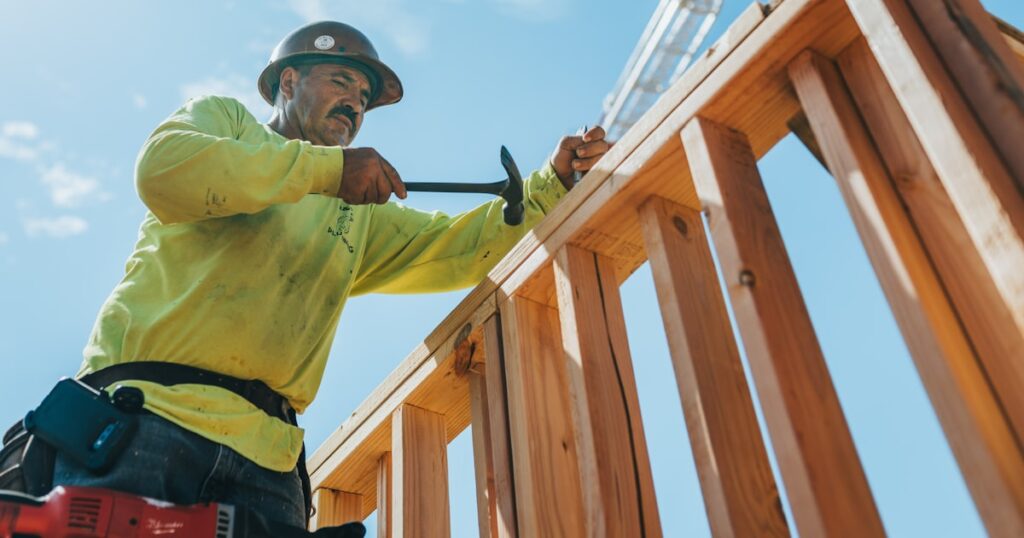
Construction is one of the most dangerous industries to work in. Working at height, heavy machinery, moving vehicles and busy sites mean that when safety slips, the results can be serious. If you’ve been injured on a building site through no fault of your own, you may be entitled to compensation — and the law is firmly on your side.
This guide explains how a construction accident claim works in England & Wales: your employer’s duties, who can claim, the accidents we see most often, and how to start a claim.
Your Employer’s Duties on a Construction Site
Anyone in control of a construction site has strict legal duties to keep people safe, under the Health and Safety at Work etc. Act 1974, the Construction (Design and Management) Regulations 2015, the Work at Height Regulations 2005 and more. In practice that means safe scaffolding and access equipment, guard rails and edge protection, proper training, the right personal protective equipment (PPE), and well-maintained machinery. When those duties are breached and someone is hurt, a claim can follow.
Common Construction Site Accidents
| Type of accident | Typical causes |
|---|---|
| Falls from height | Unsafe scaffolding, ladders, roofs and openings — the biggest cause of serious site injuries. |
| Struck by objects | Falling tools or materials, poorly stacked loads, and site vehicles. |
| Machinery & tools | Unguarded or faulty machinery, power tools and cutting equipment. |
| Slips, trips and falls | Uneven ground, trailing cables, poor housekeeping and inadequate lighting. |
| Collapses & excavations | Trench and structure collapses, and unsupported excavations. |
| Electrocution & burns | Contact with live wiring or unsafe electrical systems. |
Who Can Make a Construction Accident Claim?
You can potentially claim whether you’re an employee, a subcontractor, self-employed, an agency worker or even a visitor to the site — because the duty to keep the site safe is owed broadly. A successful claim is paid by the responsible party’s insurance, not out of a colleague’s pocket, and it’s unlawful to sack or treat you unfairly for making a legitimate claim. Serious site injuries must also be reported to the Health and Safety Executive under RIDDOR.
What Can You Claim For?
Your compensation is made up of general damages for the injury itself — from fractures to serious head, spinal or life-changing injuries — and special damages for your financial losses, such as lost earnings, medical and rehabilitation costs, care and travel. For a guide to typical figures, see our compensation payouts guide, or try our compensation calculator. Construction accidents sit within our wider accident at work claims work.
How to Make a Claim
- Report the accident and make sure it’s recorded in the site accident book.
- Get medical attention and keep records of your treatment.
- Gather evidence — photographs, witness details, and the site’s risk assessments if you can.
- Note your losses — keep receipts and a record of any earnings lost.
- Speak to a solicitor, who can identify who was responsible and deal with the insurers for you.
Is There a Time Limit?
Yes. In England & Wales you normally have three years from the date of the accident to start a claim. For younger workers under 18 the time limit runs from their 18th birthday, and different rules apply where someone lacks mental capacity. Acting early helps, while site conditions and records can still be preserved.
Frequently Asked Questions
Can I claim if I’m a subcontractor or self-employed?
Often, yes. The duty to keep a construction site safe is owed to workers on site regardless of exactly who employs them, so subcontractors, self-employed and agency workers can usually claim if the site was unsafe.
Can I be sacked for making a construction accident claim?
No. It’s unlawful to dismiss or treat you unfairly for making a legitimate injury claim, which is paid by insurance, not by your employer directly.
What if I was partly to blame?
You may still be able to claim. Compensation can be reduced to reflect your share of responsibility, but partial fault doesn’t automatically stop a claim.
How much compensation could I receive?
It depends on the injury and your financial losses. See our compensation payouts guide for typical brackets, then add your lost earnings and other costs on top.
Is a construction accident claim No Win No Fee?
Yes — Din Solicitors handles construction accident claims on a No Win, No Fee basis, so there’s nothing to pay upfront and nothing to pay if your claim is unsuccessful.
Start Your Construction Accident Claim
If you’ve been injured on a building site through no fault of your own, our specialist solicitors are here to help. Din Solicitors acts for construction workers across England & Wales on a No Win No Fee basis. Learn more about accident at work claims, start your claim today, or call 01422 647175 for free, no-obligation advice.
This article is general information, not legal advice for your specific situation. Din Solicitors is authorised and regulated by the Solicitors Regulation Authority (SRA No. 8008984). Last reviewed: July 2026.