WHAT IS A MILITARY PARACHUTE ACCIDENT CLAIM?
Airborne training carries risk — but not negligence.
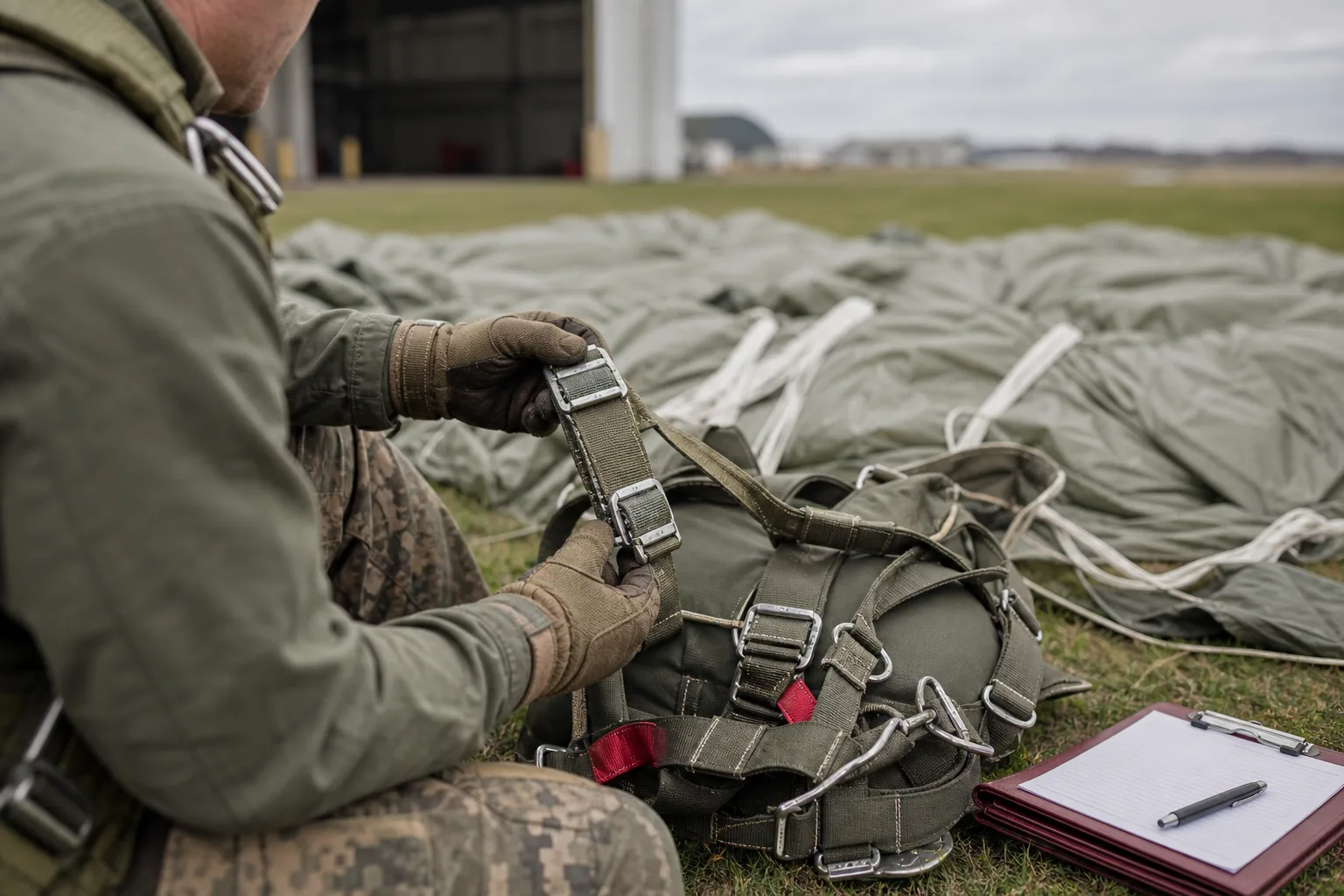
Parachuting and airborne training are inherently demanding, but the Ministry of Defence still has a legal duty to train, supervise and equip its personnel properly, and to manage the conditions in which jumps take place.
Where an accident was caused by inadequate training, unsafe drop conditions, negligent supervision or faulty equipment — rather than the ordinary risks you accepted — you may be entitled to compensation for your injuries, even if you are still serving.
What we can claim for
Parachute Landing Injuries
Fractures and crush injuries from heavy or uncontrolled landings.
Broken Bones & Fractures
Ankle, leg, pelvis and other fractures from jump impacts.
Spinal & Back Injuries
Back and spinal damage that can be serious and life-changing.
Soft-Tissue Injuries
Ligament, tendon and joint damage affecting your mobility.
Faulty Equipment
Injuries caused by defective parachutes, harnesses or kit.
Loss of Earnings
Compensation where the injury ended or limited your career.
You may have a claim if…
You served in the Army, Royal Navy, RAF or Royal Marines (regular or reserve).
You were injured during a parachute jump, descent or airborne training.
The accident involved unsafe conditions, inadequate training or faulty equipment.
You suffered an injury as a result.
How your claim works
01
Free consultation
Tell us how the accident happened and how you were injured. We assess your claim at no cost.
02
Evidence & medical records
We obtain accident reports, service records and arrange a medical assessment of your injuries.
03
We pursue the MOD
We build your case and bring the claim against the Ministry of Defence on your behalf.
04
You are compensated
Your claim is settled and you receive the compensation you are owed.
Military parachute accident FAQs
Can I claim for a parachute accident in the Armed Forces?+
Yes — where your accident was caused by negligence, such as inadequate training, unsafe drop conditions, poor supervision or faulty equipment, you may be able to bring a compensation claim against the Ministry of Defence. This applies to serving personnel and veterans.
But I knew parachuting was dangerous — does that stop me claiming?+
Not on its own. Accepting the ordinary risks of airborne training does not mean accepting negligence. The MOD still has a duty to train, supervise and equip you properly, and to manage the conditions of each jump. Where it fell short of that duty, you can still have a valid claim.
What injuries can I claim for?+
Common parachute injuries include fractures, spinal and back injuries, head injuries, dislocations and serious soft-tissue damage, as well as any psychological effects. We can also claim for your financial losses, care needs and the impact on your career.
I have left the forces — is it too late?+
Not necessarily. The three-year time limit usually runs from the date of the accident, or from when you first realised the full extent of your injury. Courts also have discretion to extend the limit, so it is always worth asking us.
Will claiming affect my AFCS award or pension?+
A civil claim is separate from the Armed Forces Compensation Scheme and War Pension, and can usually be made in addition to them. We will explain how they interact so any existing award is properly accounted for.
Is a parachute accident claim No Win No Fee?+
Yes — we handle military parachute accident claims on a No Win, No Fee basis, so there is nothing to pay upfront and nothing to pay if your claim is not successful.
FREE CLAIM CHECK
See if you can claim in 60 seconds